EB-1A Expert Recommendation Letters: What Makes Them Actually Work
Last updated: May 17, 2026 · 9 min read
By the Timeline of You team · 9 min read
Expert recommendation letters are often the deciding factor in an EB-1A petition. Not citations, not awards, not salary data — letters. A mediocre petition with strong letters can get approved. A strong petition with generic letters frequently gets an RFE. Most petitioners get this wrong, and they don't find out until months after filing.
Here's what USCIS is actually looking for, and what makes the difference between a letter that moves the needle and one that's essentially noise.
The Purpose of Expert Letters in EB-1A
USCIS adjudicators are not subject matter experts in machine learning, protein folding, distributed systems, or whatever field you work in. They're trained in immigration law. Their job is to evaluate whether you meet USCIS's regulatory criteria — and for EB-1A, that means determining whether you're in “that small percentage who has risen to the very top of the field of endeavor.”
They cannot evaluate that on their own. Expert letters are the bridge. They translate your technical accomplishments into evidence the adjudicator can evaluate: is this person's work widely recognized? Did it change something? Do credible people in the field consider them extraordinary?
This is why a generic letter from a famous person is worth less than a specific letter from a well-credentialed person. USCIS doesn't just count the endorsers. They read what the endorsers say.
The Independence Requirement (This Is Non-Negotiable)
Letters from co-authors, former colleagues at the same employer, or direct supervisors are treated with significant skepticism. USCIS calls these “interested parties” — people who have a professional incentive to recommend you positively.
The standard language in immigration law is that letters should come from “independent experts in the field who can speak to the petitioner's work.” In practice this means:
Weak
Current teammate or supervisor
Looks like an interested-party endorsement, even if the person is senior.
Use carefully
Same university or former lab, no direct collaboration
Can help, but USCIS will look for independence and a specific basis of knowledge.
Strong
Independent expert who cites or uses your work
Shows your reputation traveled beyond people who already owe you goodwill.
Very strong
Competitor, conference chair, or international field leader
Signals independent recognition from someone with no reason to inflate your case.
- Do not use: current or recent co-authors on papers you're citing as evidence
- Do not use: colleagues from the same company, especially the same team
- Do not use: your PhD advisor (unless you're citing work independent of your thesis)
- Use with caution: people from your university who know you but never collaborated directly
- Strong: people who cite your work but have never worked with you
- Strong: people in adjacent fields who know your work by reputation
- Very strong: people at competing companies or institutions who independently validate your impact
You should aim for at least 4–5 of your 6–8 letters to come from people with no direct professional overlap with you. This isn't just strategy — it's the most honest signal that your reputation has spread beyond your immediate network.
What a Strong Letter Actually Says
Let's be concrete. Here are the two versions of a letter about the same person:
Weak letter (USCIS sees through this)
“Dr. Sharma is an exceptional researcher in the field of machine learning. Their work on transformer architectures has been widely cited and recognized by the community. I highly recommend Dr. Sharma for this petition and believe they represent the best of their field.”
Strong letter (this is what changes outcomes)
“I am a professor of machine learning at ETH Zurich and program chair of ICLR 2025. I became aware of Dr. Sharma's work through their 2023 paper on efficient attention mechanisms, which our lab independently discovered and cited in our own work on long-context models. The specific contribution — a linear approximation that reduces attention complexity from O(n²) to O(n log n) without significant accuracy loss — was a meaningful advance that several groups, including ours, have integrated into production training pipelines. Prior to this work, the dominant approach required significantly more compute for long-context tasks. Dr. Sharma's work is cited in 340+ papers in the past two years, a rate that places it in the top 1% of papers from that period at major venues. I would place Dr. Sharma in the top 5% of ML researchers at their career stage globally.”
The difference is specificity, context, and credibility. The strong letter tells USCIS: here is the problem, here is what this person did, here is how I know independently that it mattered, and here is a concrete assessment of rank within the field.
The Letter Writer's Own Credentials Matter
USCIS weighs letters differently based on who wrote them. A NeurIPS best paper winner assessing an ML researcher's work carries more weight than a postdoc's assessment of the same researcher. An IEEE Fellow commenting on someone's systems contributions means something different than a mid-career engineer from a small company saying the same thing.
This doesn't mean you need Nobel laureates — it means you need credible experts. “Credible” means their CV demonstrates they are themselves recognized in the field: named positions, publications at top venues, editorial roles, industry positions with appropriate scope.
Every letter should open with a paragraph establishing the writer's own credentials and their basis for knowing your work. USCIS uses this to calibrate how much weight to assign the assessment.
Geographic Distribution = International Recognition
One underused strategy: letters from experts outside the US signal international recognition, which is one of USCIS's explicit EB-1A standards. A letter from a professor in Germany, a researcher in Canada, or an industry lead in the UK adds a dimension that letters only from US contacts cannot provide.
If your work is cited in papers from international institutions, those are natural contacts. If you've reviewed papers for international conferences or journals, those are relationships you can lean on. If your open-source work has contributors or users from other countries, industrial contacts in those companies can sometimes speak to the global impact.
Letters Should Address Specific Criteria
EB-1A has 10 regulatory criteria, and you need to meet at least 3. Your letters shouldn't just be general endorsements — they should be drafted with specific criteria in mind.
Original contributions of major significance
What the contribution was, state of the field before it, measurable downstream impact
High salary / remuneration
Industry expert confirming that compensation at your level is reserved for top performers
Critical role in distinguished organization
Specific description of your role, scope of decisions, why the organization could not have replicated your contribution with a typical hire
Judging others' work
Program committee chair confirming your contributions, quality of feedback, scope of responsibility
Published work in major media or professional publications
Editor or co-author confirming the selectivity of the venue and the significance of your specific piece
Assign each letter writer a primary criterion focus. Make sure at least one letter per claimed criterion speaks directly to it. An attorney or experienced preparer can help draft letter outlines that you share with the letter writer — this is standard practice and not ghostwriting in any problematic sense.
How to Approach Potential Letter Writers
Cold emails to strangers work poorly. The best letter writers are people who already have some awareness of your work — even if you've never spoken. Here's the approach that works:
Find who's citing your work. Google Scholar, Semantic Scholar, and ResearchGate all let you see who cites specific papers. Authors who cite you have already validated your work in a public venue. Reaching out to say “I noticed you cited my work on X — I'm in the process of an immigration petition and would appreciate your perspective on its significance” is a warm opener that usually gets a response.
Program committee connections. If you've reviewed for conferences, the chairs of those conferences know your name. Area chairs at top ML conferences (NeurIPS, ICML, ICLR) are ideal letter writers for ML researchers — they're independently credentialed, they can speak to your reviewing contributions, and they know the field.
Conference contacts. People you've talked to at conferences, people who asked questions after your talk, collaborators of collaborators. You don't need a deep relationship — you need enough mutual awareness that they can write something specific.
The actual ask. Be direct. Tell them what you need, why you're asking them specifically (what do you want them to speak to), and that you can provide a draft outline of the points you'd like covered. Give them an easy out. Most experts who agree to write a letter will appreciate a detailed outline — it saves them time and ensures the letter is useful.
How Many Letters, and What Red Flags to Avoid
Typical strong EB-1A petitions include 6–8 expert letters. More is not always better — 12 weak letters are worse than 6 strong ones, because they dilute the signal. USCIS reads all of them.
Red flags that can hurt rather than help:
- Letters that contradict each other. If three letters say you pioneered approach X and one says you refined approach Y, USCIS notices the inconsistency.
- Template letters with obvious copy-paste. Multiple letters using identical phrasing signal that you wrote them and the “experts” just signed. Immigration attorneys are aware of this pattern; so is USCIS.
- Credentialing mismatch. A letter about your systems engineering work from a bioinformatics professor carries less weight than it might seem — USCIS will question why someone outside your field is assessing your work.
- Vagueness about the letter writer's own accomplishments. Letters that don't establish the writer's credentials upfront get discounted. Every letter should include a paragraph on the writer's position, publications, and basis for expertise.
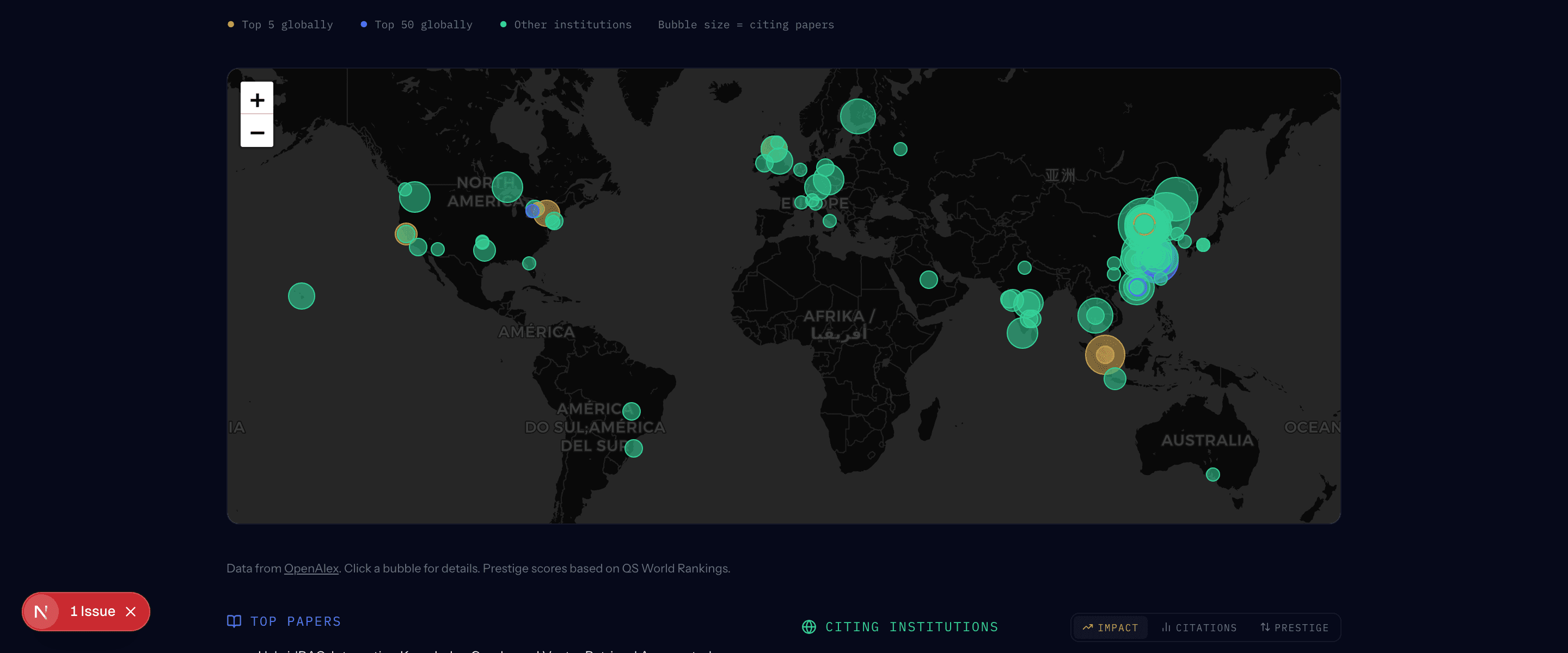
Timeline of You's citation network shows who cites your work globally — the same researchers are your natural pool for independent expert letters. People who already cite you in their own papers are the strongest possible letter writers.
The honest summary on letters
Most petitioners treat expert letters as a checkbox — get six people to write something nice, submit, done. The petitioners whose letters actually work treat them as the primary argument of the case — carefully chosen experts, specific criterion assignments, detailed outlines, and final letters that read like genuine assessments from people who independently know and respect the work. The difference is real, and USCIS can tell.
See who in your citation network can write your letters
Free assessment maps your background against all 10 EB-1A criteria — takes 3 minutes. We'll also show you your citation network so you can identify independent letter writers.
Get my free EB-1A assessment →EB-1A Strategy Guide
Get notified when we publish new guides
Practical EB-1A strategy for researchers, engineers, and founders. No spam.
Related Guides
EB-1A for Tech Workers and AI Researchers: A Practical Guide
How engineers, ML researchers, and technical leads can build a compelling EB-1A case — which criteria map best to a tech career.
10 min →
Filing EB-1A Without an Attorney: What's Actually Involved
EB-1A self-petitions are legal and increasingly common. Here's what pro se filing actually requires and where people get it wrong.
8 min →
All 10 EB-1A Criteria Explained With Real Examples
A plain-English breakdown of every USCIS extraordinary ability criterion — what counts, what doesn't, and how to document each one.
12 min →